Buy usatrip.org ?
We are moving the project
usatrip.org .
Are you interested in purchasing the domain
usatrip.org ?
domain@kv-gmbh.de · 0541-91531010
Buy usatrip.org ?
What are harmonic dissonances?
Harmonic dissonances occur when two or more musical notes are played together and create a sense of tension or instability. This can happen when the notes are not in harmony with each other, creating a clash or discordant sound. Dissonances can add complexity and interest to music, and are often resolved by moving to more harmonious combinations of notes. In Western music theory, dissonances are typically resolved to consonant intervals, creating a sense of resolution and stability. **
What are harmonic oscillations?
Harmonic oscillations are repetitive back-and-forth movements or vibrations that follow a specific pattern. They are characterized by a sinusoidal or wave-like motion, where the displacement of the oscillating object from its equilibrium position is proportional to the restoring force acting on it. Examples of harmonic oscillations include the swinging of a pendulum, the motion of a mass-spring system, and the vibrations of a guitar string. These oscillations are important in many areas of physics and engineering, as they can be used to describe and analyze various natural and mechanical systems. **
Similar search terms for Harmonic
Top-Angebote
Products related to Harmonic:
-
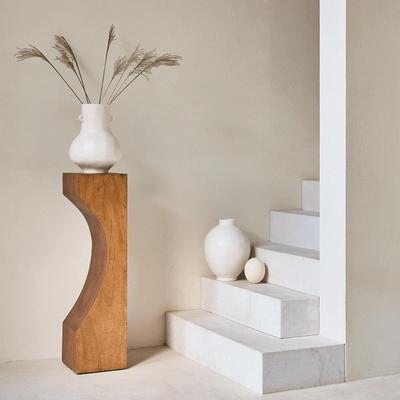
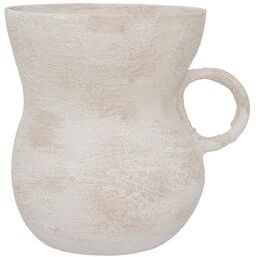
Urban Nature Culture Vase RelaxedQuiet elegancy comes to life in Urban Nature Culture's vase Relaxed. Handmade in Portugal, this ceramic vase has a shape beyond anything you've seen - it's organic, it flows and steals your heart with its playful ear.123,40 $*Shipping: 0,00 $Secure redirect to the provider
-
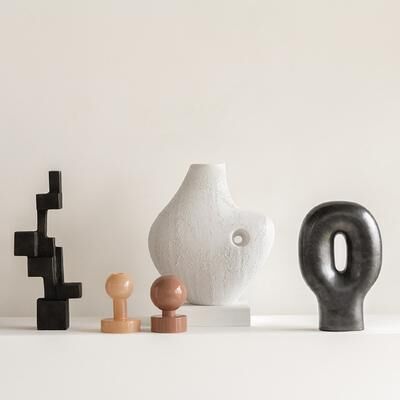
Urban Nature Culture Vase Ace - AceSetting forth a tradition that is centuries old, pottery has ever been one of Portugal's trades. Urban Nature Culture loves to work with Portuguese artisans - who use their skills to combine modern looks and contemporary design with techniques of old.145,60 $*Shipping: 0,00 $Secure redirect to the provider



-
What is the definition of a harmonic and a non-harmonic oscillation?
A harmonic oscillation is a type of motion where the restoring force is directly proportional to the displacement from the equilibrium position, and the motion follows a sinusoidal pattern. This type of oscillation is characterized by a constant frequency and a regular, repeating pattern. On the other hand, a non-harmonic oscillation does not follow a sinusoidal pattern and the restoring force is not directly proportional to the displacement. Non-harmonic oscillations can have irregular frequencies and patterns, and are often more complex in nature. **
-
What is the definition of a harmonic and a non-harmonic vibration?
A harmonic vibration is a type of motion that repeats itself at regular intervals, following a predictable pattern. It is characterized by a sinusoidal waveform and has a constant frequency and amplitude. On the other hand, a non-harmonic vibration does not follow a regular pattern and its waveform is not sinusoidal. Non-harmonic vibrations can have varying frequencies and amplitudes, making them more complex and unpredictable compared to harmonic vibrations. **
-
What is a harmonic scale?
A harmonic scale is a musical scale that is created by stacking intervals in a specific pattern to produce a unique sound. It is different from traditional scales in that it may contain intervals that are not typically found in Western music scales. Harmonic scales are often used in jazz, world music, and other genres to create interesting and exotic sounds. They can add depth and complexity to a musical composition. **
-
What is a harmonic wave?
A harmonic wave is a type of wave that has a regular, repeating pattern. It is characterized by a sinusoidal shape, where the wave oscillates back and forth around a central axis. Harmonic waves have a specific frequency and wavelength, and they are often used to describe sound waves and electromagnetic waves. These waves are important in physics and engineering because they can be easily analyzed and manipulated using mathematical techniques like Fourier analysis. **

When is a vibration harmonic?
A vibration is considered harmonic when it follows a regular, repeating pattern with a constant frequency. In other words, the motion of the vibrating object is predictable and can be described by a simple mathematical relationship, such as a sine or cosine function. Harmonic vibrations are characterized by a single frequency and are often associated with systems that exhibit simple harmonic motion, such as a mass-spring system or a pendulum. **
What is a harmonic sequence?
A harmonic sequence is a sequence of numbers in which the reciprocals of the terms form an arithmetic progression. In other words, a sequence is considered harmonic if the difference between the reciprocals of consecutive terms is constant. For example, the sequence 1, 1/2, 1/3, 1/4, 1/5 is a harmonic sequence because the difference between the reciprocals of consecutive terms is constant (1/2 - 1 = 1/3 - 1/2 = 1/4 - 1/3 = 1/5 - 1/4 = 1/6). **
Top-Angebote
Products related to Harmonic:
-
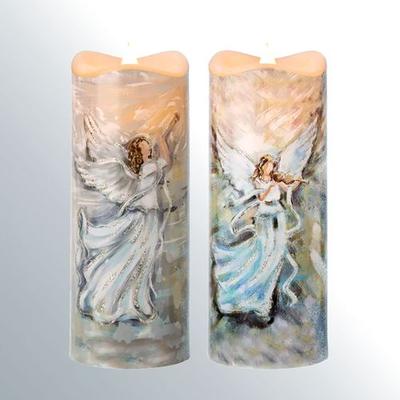
Regency International Harmonic Angel LED Candles Multi Warm Set of Two, Set of Two, Multi WarmThe heavens above can hear the Harmonic Angels play their sweet melodies. This ivory molded plastic, flameless LED candle set of two features angels playing instruments. One plays a violin, and the other plays a trumpet. Both wear flowing gowns and...59,99 $*Shipping: 13,95 $Secure redirect to the provider
-
Urban Nature Culture Vase RelaxedQuiet elegancy comes to life in Urban Nature Culture's vase Relaxed. Handmade in Portugal, this ceramic vase has a shape beyond anything you've seen - it's organic, it flows and steals your heart with its playful ear.123,40 $*Shipping: 0,00 $Secure redirect to the provider
-
What are harmonic dissonances?
Harmonic dissonances occur when two or more musical notes are played together and create a sense of tension or instability. This can happen when the notes are not in harmony with each other, creating a clash or discordant sound. Dissonances can add complexity and interest to music, and are often resolved by moving to more harmonious combinations of notes. In Western music theory, dissonances are typically resolved to consonant intervals, creating a sense of resolution and stability. **
-
What are harmonic oscillations?
Harmonic oscillations are repetitive back-and-forth movements or vibrations that follow a specific pattern. They are characterized by a sinusoidal or wave-like motion, where the displacement of the oscillating object from its equilibrium position is proportional to the restoring force acting on it. Examples of harmonic oscillations include the swinging of a pendulum, the motion of a mass-spring system, and the vibrations of a guitar string. These oscillations are important in many areas of physics and engineering, as they can be used to describe and analyze various natural and mechanical systems. **
-
What is the definition of a harmonic and a non-harmonic oscillation?
A harmonic oscillation is a type of motion where the restoring force is directly proportional to the displacement from the equilibrium position, and the motion follows a sinusoidal pattern. This type of oscillation is characterized by a constant frequency and a regular, repeating pattern. On the other hand, a non-harmonic oscillation does not follow a sinusoidal pattern and the restoring force is not directly proportional to the displacement. Non-harmonic oscillations can have irregular frequencies and patterns, and are often more complex in nature. **
-
What is the definition of a harmonic and a non-harmonic vibration?
A harmonic vibration is a type of motion that repeats itself at regular intervals, following a predictable pattern. It is characterized by a sinusoidal waveform and has a constant frequency and amplitude. On the other hand, a non-harmonic vibration does not follow a regular pattern and its waveform is not sinusoidal. Non-harmonic vibrations can have varying frequencies and amplitudes, making them more complex and unpredictable compared to harmonic vibrations. **
Similar search terms for Harmonic
-
Urban Nature Culture Vase Ace - AceSetting forth a tradition that is centuries old, pottery has ever been one of Portugal's trades. Urban Nature Culture loves to work with Portuguese artisans - who use their skills to combine modern looks and contemporary design with techniques of old.145,60 $*Shipping: 0,00 $Secure redirect to the provider
-
Urban Nature Culture Vase Talvi - WhiteFloating the sea waves, a sense of calm takes over, feeling at home in the world. That same feeling we get at home, like a safe haven to relax our senses and feast our eyes on our most cherished things.267,80 $*Shipping: 0,00 $Secure redirect to the provider
-
What is a harmonic scale?
A harmonic scale is a musical scale that is created by stacking intervals in a specific pattern to produce a unique sound. It is different from traditional scales in that it may contain intervals that are not typically found in Western music scales. Harmonic scales are often used in jazz, world music, and other genres to create interesting and exotic sounds. They can add depth and complexity to a musical composition. **
-
What is a harmonic wave?
A harmonic wave is a type of wave that has a regular, repeating pattern. It is characterized by a sinusoidal shape, where the wave oscillates back and forth around a central axis. Harmonic waves have a specific frequency and wavelength, and they are often used to describe sound waves and electromagnetic waves. These waves are important in physics and engineering because they can be easily analyzed and manipulated using mathematical techniques like Fourier analysis. **
-
When is a vibration harmonic?
A vibration is considered harmonic when it follows a regular, repeating pattern with a constant frequency. In other words, the motion of the vibrating object is predictable and can be described by a simple mathematical relationship, such as a sine or cosine function. Harmonic vibrations are characterized by a single frequency and are often associated with systems that exhibit simple harmonic motion, such as a mass-spring system or a pendulum. **
-
What is a harmonic sequence?
A harmonic sequence is a sequence of numbers in which the reciprocals of the terms form an arithmetic progression. In other words, a sequence is considered harmonic if the difference between the reciprocals of consecutive terms is constant. For example, the sequence 1, 1/2, 1/3, 1/4, 1/5 is a harmonic sequence because the difference between the reciprocals of consecutive terms is constant (1/2 - 1 = 1/3 - 1/2 = 1/4 - 1/3 = 1/5 - 1/4 = 1/6). **
* All prices are inclusive of VAT and, if applicable, plus shipping costs. The offer information is based on the details provided by the respective shop and is updated through automated processes. Real-time updates do not occur, so deviations can occur in individual cases. ** Note: Parts of this content were created by AI.