Buy usatrip.org ?
We are moving the project
usatrip.org .
Are you interested in purchasing the domain
usatrip.org ?
domain@kv-gmbh.de · 0541-91531010
Buy usatrip.org ?
Why are elastomers actually elastic?
Elastomers are actually elastic because of their unique molecular structure. They are made up of long, coiled polymer chains that can be stretched and then return to their original shape when the force is removed. This is due to the entropic elasticity of the polymer chains, which allows them to easily slide past each other and then spring back into place. Additionally, the presence of cross-links between the polymer chains provides additional strength and resilience, allowing elastomers to maintain their elasticity over many cycles of stretching and relaxing. **
How do elastomers harm the environment?
Elastomers harm the environment primarily through pollution and waste generation. When elastomers are disposed of in landfills, they can release harmful chemicals and toxins into the soil and water, leading to contamination. Additionally, the production of elastomers often involves the use of non-renewable resources and energy, contributing to greenhouse gas emissions and climate change. Furthermore, the slow decomposition rate of elastomers means they can persist in the environment for a long time, posing a threat to wildlife and ecosystems. **


Similar search terms for Elastomers
Top-Angebote
Products related to Elastomers:
-
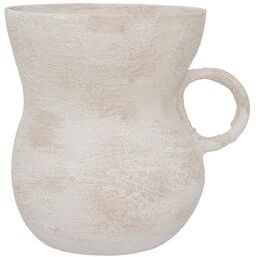
Urban Nature Culture Vase RelaxedQuiet elegancy comes to life in Urban Nature Culture's vase Relaxed. Handmade in Portugal, this ceramic vase has a shape beyond anything you've seen - it's organic, it flows and steals your heart with its playful ear.123,40 $*Shipping: 0,00 $Secure redirect to the provider
-
Urban Nature Culture Vase Talvi - WhiteFloating the sea waves, a sense of calm takes over, feeling at home in the world. That same feeling we get at home, like a safe haven to relax our senses and feast our eyes on our most cherished things.267,80 $*Shipping: 0,00 $Secure redirect to the provider



-
How are elastomers, thermosets, and thermoplastics produced through reactions?
Elastomers, thermosets, and thermoplastics are produced through different types of reactions. Elastomers are produced through a process called vulcanization, where rubber molecules are cross-linked with sulfur to improve their strength and elasticity. Thermosets are produced through a process called polymerization, where monomers are chemically bonded together to form a three-dimensional network that cannot be melted or reshaped once set. Thermoplastics are produced through a process called polymerization as well, but the resulting polymer chains are linear and can be melted and reshaped multiple times due to their lack of cross-linking. Each of these reactions results in the formation of different types of polymers with distinct properties and applications. **
-
How do you cut elastomers into shapes using a utility knife?
To cut elastomers into shapes using a utility knife, first, ensure the elastomer is securely held in place on a stable surface. Then, use a sharp utility knife to carefully score along the desired cutting line multiple times, gradually increasing the pressure with each pass. Once a deep enough score is made, gently bend the elastomer along the scored line to break it along the cut. Finally, use the utility knife to clean up any rough edges or refine the shape as needed. **
-
How can thermoplastics and elastomers be distinguished based on their structural formula?
Thermoplastics and elastomers can be distinguished based on their structural formula by looking at the arrangement of their polymer chains. Thermoplastics have linear or branched polymer chains that are able to move past each other, allowing them to be melted and reshaped. In contrast, elastomers have a more coiled or cross-linked structure, which gives them the ability to return to their original shape after being stretched or deformed. This difference in structure gives thermoplastics their flexibility and moldability, while elastomers have more elastic properties. **
-
What is the description of thermoplastics, thermosets, and elastomers at the particle level?
Thermoplastics are made up of long polymer chains that are entangled and held together by weak intermolecular forces. At the particle level, these chains can slide past each other when heated, allowing the material to be melted and reshaped. Thermosets, on the other hand, are made up of a three-dimensional network of cross-linked polymer chains. At the particle level, these cross-links make the material rigid and unable to be melted or reshaped once it has been cured. Elastomers are polymers with coiled polymer chains that can be stretched and return to their original shape. At the particle level, the chains are able to stretch and then recoil due to the weak intermolecular forces between the chains. **

Is man a being of nature or culture, or is culture the nature of man?
Man is a being of both nature and culture. While humans are inherently a part of the natural world, our ability to create and participate in culture sets us apart from other species. Culture shapes our beliefs, behaviors, and interactions with the world, becoming an essential part of our identity. Therefore, culture can be seen as the nature of man, as it influences and defines our existence in profound ways. **
Is man a creature of nature or culture, or is culture the nature of man?
Man is a complex being influenced by both nature and culture. While humans are inherently part of the natural world, our behaviors, beliefs, and practices are largely shaped by the societies we live in. Culture can be seen as the nature of man in the sense that it is a fundamental aspect of human existence, shaping our identities and interactions with the world. Ultimately, the relationship between nature and culture is intertwined in shaping the essence of humanity. **
Top-Angebote
Products related to Elastomers:
-
Urban Nature Culture Vase RelaxedQuiet elegancy comes to life in Urban Nature Culture's vase Relaxed. Handmade in Portugal, this ceramic vase has a shape beyond anything you've seen - it's organic, it flows and steals your heart with its playful ear.123,40 $*Shipping: 0,00 $Secure redirect to the provider
-
Why are elastomers actually elastic?
Elastomers are actually elastic because of their unique molecular structure. They are made up of long, coiled polymer chains that can be stretched and then return to their original shape when the force is removed. This is due to the entropic elasticity of the polymer chains, which allows them to easily slide past each other and then spring back into place. Additionally, the presence of cross-links between the polymer chains provides additional strength and resilience, allowing elastomers to maintain their elasticity over many cycles of stretching and relaxing. **
-
How do elastomers harm the environment?
Elastomers harm the environment primarily through pollution and waste generation. When elastomers are disposed of in landfills, they can release harmful chemicals and toxins into the soil and water, leading to contamination. Additionally, the production of elastomers often involves the use of non-renewable resources and energy, contributing to greenhouse gas emissions and climate change. Furthermore, the slow decomposition rate of elastomers means they can persist in the environment for a long time, posing a threat to wildlife and ecosystems. **
-
How are elastomers, thermosets, and thermoplastics produced through reactions?
Elastomers, thermosets, and thermoplastics are produced through different types of reactions. Elastomers are produced through a process called vulcanization, where rubber molecules are cross-linked with sulfur to improve their strength and elasticity. Thermosets are produced through a process called polymerization, where monomers are chemically bonded together to form a three-dimensional network that cannot be melted or reshaped once set. Thermoplastics are produced through a process called polymerization as well, but the resulting polymer chains are linear and can be melted and reshaped multiple times due to their lack of cross-linking. Each of these reactions results in the formation of different types of polymers with distinct properties and applications. **
-
How do you cut elastomers into shapes using a utility knife?
To cut elastomers into shapes using a utility knife, first, ensure the elastomer is securely held in place on a stable surface. Then, use a sharp utility knife to carefully score along the desired cutting line multiple times, gradually increasing the pressure with each pass. Once a deep enough score is made, gently bend the elastomer along the scored line to break it along the cut. Finally, use the utility knife to clean up any rough edges or refine the shape as needed. **
Similar search terms for Elastomers
-
Urban Nature Culture Vase Talvi - WhiteFloating the sea waves, a sense of calm takes over, feeling at home in the world. That same feeling we get at home, like a safe haven to relax our senses and feast our eyes on our most cherished things.267,80 $*Shipping: 0,00 $Secure redirect to the provider
-
Urban Nature Culture Vase Ace - AceSetting forth a tradition that is centuries old, pottery has ever been one of Portugal's trades. Urban Nature Culture loves to work with Portuguese artisans - who use their skills to combine modern looks and contemporary design with techniques of old.145,60 $*Shipping: 0,00 $Secure redirect to the provider
-
How can thermoplastics and elastomers be distinguished based on their structural formula?
Thermoplastics and elastomers can be distinguished based on their structural formula by looking at the arrangement of their polymer chains. Thermoplastics have linear or branched polymer chains that are able to move past each other, allowing them to be melted and reshaped. In contrast, elastomers have a more coiled or cross-linked structure, which gives them the ability to return to their original shape after being stretched or deformed. This difference in structure gives thermoplastics their flexibility and moldability, while elastomers have more elastic properties. **
-
What is the description of thermoplastics, thermosets, and elastomers at the particle level?
Thermoplastics are made up of long polymer chains that are entangled and held together by weak intermolecular forces. At the particle level, these chains can slide past each other when heated, allowing the material to be melted and reshaped. Thermosets, on the other hand, are made up of a three-dimensional network of cross-linked polymer chains. At the particle level, these cross-links make the material rigid and unable to be melted or reshaped once it has been cured. Elastomers are polymers with coiled polymer chains that can be stretched and return to their original shape. At the particle level, the chains are able to stretch and then recoil due to the weak intermolecular forces between the chains. **
-
Is man a being of nature or culture, or is culture the nature of man?
Man is a being of both nature and culture. While humans are inherently a part of the natural world, our ability to create and participate in culture sets us apart from other species. Culture shapes our beliefs, behaviors, and interactions with the world, becoming an essential part of our identity. Therefore, culture can be seen as the nature of man, as it influences and defines our existence in profound ways. **
-
Is man a creature of nature or culture, or is culture the nature of man?
Man is a complex being influenced by both nature and culture. While humans are inherently part of the natural world, our behaviors, beliefs, and practices are largely shaped by the societies we live in. Culture can be seen as the nature of man in the sense that it is a fundamental aspect of human existence, shaping our identities and interactions with the world. Ultimately, the relationship between nature and culture is intertwined in shaping the essence of humanity. **
* All prices are inclusive of VAT and, if applicable, plus shipping costs. The offer information is based on the details provided by the respective shop and is updated through automated processes. Real-time updates do not occur, so deviations can occur in individual cases. ** Note: Parts of this content were created by AI.