Buy usatrip.org ?
We are moving the project
usatrip.org .
Are you interested in purchasing the domain
usatrip.org ?
domain@kv-gmbh.de · 0541-91531010
Buy usatrip.org ?
When does copper stop conducting?
Copper stops conducting electricity when it reaches its superconducting transition temperature, which is approximately -210 degrees Celsius. At this temperature, copper loses all electrical resistance and becomes a superconductor. This means that it can conduct electricity without any loss of energy, making it extremely efficient for certain applications such as in MRI machines and particle accelerators. However, achieving and maintaining such low temperatures is challenging and expensive, so superconducting copper is not commonly used in everyday electrical applications. **
When is the transistor conducting?
A transistor is conducting when it is in the "on" state, allowing current to flow between its collector and emitter terminals. This occurs when a sufficient voltage is applied to the base terminal, causing the transistor to become forward-biased and allowing current to flow through it. In this state, the transistor acts as a closed switch, allowing the flow of current through it. **


Similar search terms for Conducting
Top-Angebote
Products related to Conducting:
-
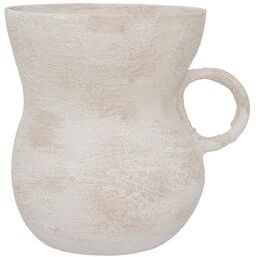
Urban Nature Culture Vase RelaxedQuiet elegancy comes to life in Urban Nature Culture's vase Relaxed. Handmade in Portugal, this ceramic vase has a shape beyond anything you've seen - it's organic, it flows and steals your heart with its playful ear.123,40 $*Shipping: 0,00 $Secure redirect to the provider
-
Urban Nature Culture Vase Talvi - WhiteFloating the sea waves, a sense of calm takes over, feeling at home in the world. That same feeling we get at home, like a safe haven to relax our senses and feast our eyes on our most cherished things.267,80 $*Shipping: 0,00 $Secure redirect to the provider



-
What are the differences in conducting?
Conducting is the art of leading a musical performance, and there are several key differences in conducting styles. One major difference is the physical gestures used by conductors to communicate with the musicians. Some conductors use large, sweeping gestures to convey emotion and energy, while others may use more subtle movements to guide the ensemble. Additionally, the level of involvement and interaction with the musicians can vary among conductors, with some taking a more authoritative approach and others fostering a collaborative atmosphere. Lastly, the interpretation of the music and the conductor's ability to convey their vision to the ensemble can also differ, resulting in unique performances. **
-
What do these conducting gestures mean?
These conducting gestures are used by a conductor to communicate with the musicians in an orchestra or ensemble. The upward movement of the baton signals the musicians to start playing or to increase the volume, while the downward movement indicates a decrease in volume or the end of a section. The side-to-side motion helps to keep the musicians in sync and can also indicate changes in tempo or dynamics. Overall, these gestures help the conductor to guide and shape the music being performed. **
-
Can old metals stop conducting electricity?
Yes, old metals can stop conducting electricity due to a process called corrosion. Over time, metals can be exposed to moisture and other environmental factors that cause them to oxidize and form a layer of corrosion on their surface. This layer can act as an insulator, preventing the flow of electricity through the metal. Additionally, old metals may also suffer from physical damage or wear and tear, which can affect their ability to conduct electricity. **
-
What are methods for conducting research?
There are several methods for conducting research, including qualitative and quantitative approaches. Qualitative research methods involve gathering non-numerical data through techniques such as interviews, focus groups, and observations. Quantitative research methods involve collecting numerical data and analyzing it using statistical techniques, such as surveys and experiments. Other methods include case studies, content analysis, and action research. Researchers may also use a combination of these methods to gain a more comprehensive understanding of their research topic. **

Which heat conducting pads use thermal paste?
Heat conducting pads that use thermal paste are typically found in electronic devices such as computers, laptops, and gaming consoles. These pads are used to transfer heat from the device's components to the heat sink for efficient cooling. Thermal paste is applied between the heat conducting pad and the component to ensure maximum heat transfer. This helps to prevent overheating and prolong the lifespan of the device. **
Is the depletion-type MOSFET self-conducting?
No, the depletion-type MOSFET is not self-conducting. It requires an external voltage to be applied to the gate terminal in order to control the flow of current between the source and drain terminals. The depletion-type MOSFET operates in the depletion mode, meaning that it conducts current when no voltage is applied to the gate terminal, unlike the enhancement-type MOSFET which requires a voltage to be applied to the gate terminal to allow current flow. **
Top-Angebote
Products related to Conducting:
-
Urban Nature Culture Vase RelaxedQuiet elegancy comes to life in Urban Nature Culture's vase Relaxed. Handmade in Portugal, this ceramic vase has a shape beyond anything you've seen - it's organic, it flows and steals your heart with its playful ear.123,40 $*Shipping: 0,00 $Secure redirect to the provider
-
When does copper stop conducting?
Copper stops conducting electricity when it reaches its superconducting transition temperature, which is approximately -210 degrees Celsius. At this temperature, copper loses all electrical resistance and becomes a superconductor. This means that it can conduct electricity without any loss of energy, making it extremely efficient for certain applications such as in MRI machines and particle accelerators. However, achieving and maintaining such low temperatures is challenging and expensive, so superconducting copper is not commonly used in everyday electrical applications. **
-
When is the transistor conducting?
A transistor is conducting when it is in the "on" state, allowing current to flow between its collector and emitter terminals. This occurs when a sufficient voltage is applied to the base terminal, causing the transistor to become forward-biased and allowing current to flow through it. In this state, the transistor acts as a closed switch, allowing the flow of current through it. **
-
What are the differences in conducting?
Conducting is the art of leading a musical performance, and there are several key differences in conducting styles. One major difference is the physical gestures used by conductors to communicate with the musicians. Some conductors use large, sweeping gestures to convey emotion and energy, while others may use more subtle movements to guide the ensemble. Additionally, the level of involvement and interaction with the musicians can vary among conductors, with some taking a more authoritative approach and others fostering a collaborative atmosphere. Lastly, the interpretation of the music and the conductor's ability to convey their vision to the ensemble can also differ, resulting in unique performances. **
-
What do these conducting gestures mean?
These conducting gestures are used by a conductor to communicate with the musicians in an orchestra or ensemble. The upward movement of the baton signals the musicians to start playing or to increase the volume, while the downward movement indicates a decrease in volume or the end of a section. The side-to-side motion helps to keep the musicians in sync and can also indicate changes in tempo or dynamics. Overall, these gestures help the conductor to guide and shape the music being performed. **
Similar search terms for Conducting
-
Urban Nature Culture Vase Talvi - WhiteFloating the sea waves, a sense of calm takes over, feeling at home in the world. That same feeling we get at home, like a safe haven to relax our senses and feast our eyes on our most cherished things.267,80 $*Shipping: 0,00 $Secure redirect to the provider
-
Urban Nature Culture Vase Ace - AceSetting forth a tradition that is centuries old, pottery has ever been one of Portugal's trades. Urban Nature Culture loves to work with Portuguese artisans - who use their skills to combine modern looks and contemporary design with techniques of old.145,60 $*Shipping: 0,00 $Secure redirect to the provider
-
Can old metals stop conducting electricity?
Yes, old metals can stop conducting electricity due to a process called corrosion. Over time, metals can be exposed to moisture and other environmental factors that cause them to oxidize and form a layer of corrosion on their surface. This layer can act as an insulator, preventing the flow of electricity through the metal. Additionally, old metals may also suffer from physical damage or wear and tear, which can affect their ability to conduct electricity. **
-
What are methods for conducting research?
There are several methods for conducting research, including qualitative and quantitative approaches. Qualitative research methods involve gathering non-numerical data through techniques such as interviews, focus groups, and observations. Quantitative research methods involve collecting numerical data and analyzing it using statistical techniques, such as surveys and experiments. Other methods include case studies, content analysis, and action research. Researchers may also use a combination of these methods to gain a more comprehensive understanding of their research topic. **
-
Which heat conducting pads use thermal paste?
Heat conducting pads that use thermal paste are typically found in electronic devices such as computers, laptops, and gaming consoles. These pads are used to transfer heat from the device's components to the heat sink for efficient cooling. Thermal paste is applied between the heat conducting pad and the component to ensure maximum heat transfer. This helps to prevent overheating and prolong the lifespan of the device. **
-
Is the depletion-type MOSFET self-conducting?
No, the depletion-type MOSFET is not self-conducting. It requires an external voltage to be applied to the gate terminal in order to control the flow of current between the source and drain terminals. The depletion-type MOSFET operates in the depletion mode, meaning that it conducts current when no voltage is applied to the gate terminal, unlike the enhancement-type MOSFET which requires a voltage to be applied to the gate terminal to allow current flow. **
* All prices are inclusive of VAT and, if applicable, plus shipping costs. The offer information is based on the details provided by the respective shop and is updated through automated processes. Real-time updates do not occur, so deviations can occur in individual cases. ** Note: Parts of this content were created by AI.